
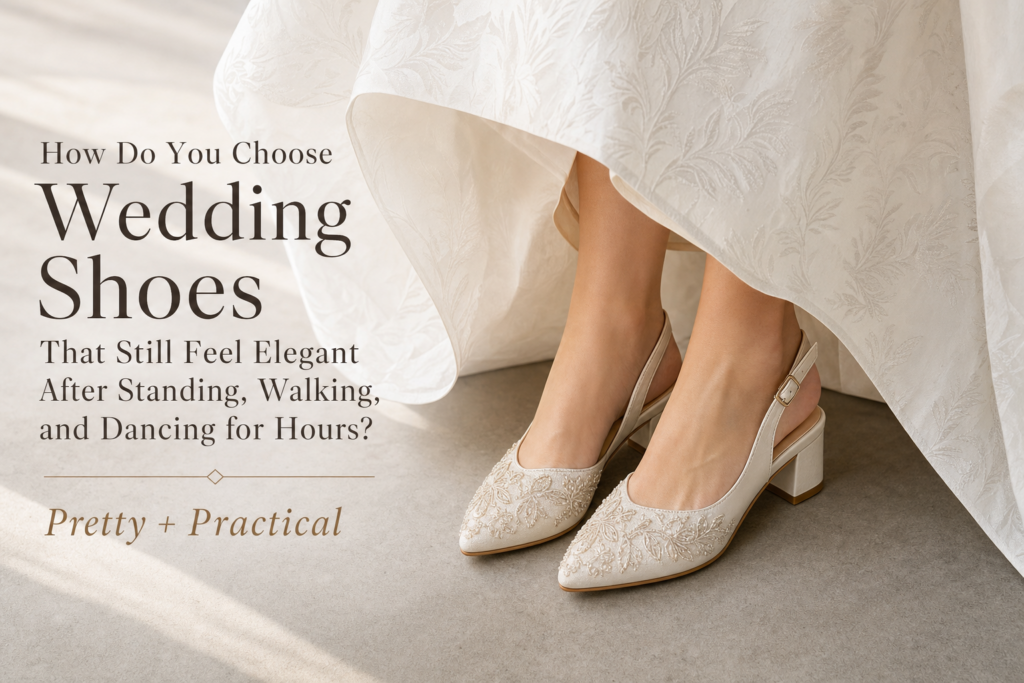
Wedding shoes can absolutely be beautiful, but the right pair also has to survive a real day instead of just a photo moment. ✨ Brides are seeing more 2026 shoe options that feel fashion-forward without defaulting to punishing heels, from slingbacks and low block heels to refined flats and bridal boots. That is great news, but it also means the smartest choice is not always the one that looks the most “bridal” on its own. It is the one that still makes sense once your dress, venue, timeline, and movement are all part of the picture.
Start with the dress and the day, not just the shoe trend. The best wedding shoes usually balance three things at once: they work with the hem and formality of the gown, they support the way you actually move, and they still feel like part of the look instead of a backup plan. If a shoe is gorgeous but changes how you walk, makes you tense up, or only works for twenty minutes, it is probably not the right wedding shoe for you.
Start with the dress, not just the shoe trend
A lot of brides fall in love with shoes in isolation, then try to make the dress work around them. ???? Usually, the easier path is the opposite. Your hemline, fabric, silhouette, and venue tell you a lot about what kind of shoe will actually look intentional. A sleek crepe gown can handle a cleaner modern shoe. A fuller skirt may hide most of the shoe unless you are walking or dancing, which can shift the decision more toward comfort and height than tiny decorative details. If you are still narrowing down the gown itself, browsing our wedding dresses collection can help you think about how different silhouettes change what the shoe really needs to do.
That is also why current trends should be filtered through real life. Slingbacks, low block heels, refined Mary Janes, sculptural heels, and even bridal boots are all getting attention right now because brides want personality and polish without feeling trapped in one old-school formula. But the trend only works if it supports the overall proportion of your look. A statement shoe should feel like a thoughtful finish, not a separate styling idea fighting for attention under the dress.
Test for movement before you fall for the details
The fastest way to tell whether a wedding shoe is actually right is to stop standing still in it. Once the shoe is on, walk in a straight line, turn, stand with your weight shifted, sit, and take a few faster steps instead of only admiring the mirror view. If the shoe already makes you grip with your toes, wobble at the ankle, or shorten your stride, that usually gets worse later, not better. The same practical mindset matters when you are evaluating gown details too, which is why our post on “What wedding dress details matter most once you start trying gowns on” pairs naturally with this conversation.
A good comfort test is simple:
- Can you walk naturally without looking down every few seconds?
- Can you stand still without shifting because of pressure points?
- Can you imagine wearing them through photos, hugs, cocktail hour, and the dance floor?
- If your dress is long, does the height still make the hem feel right without making movement harder?
Brides sometimes assume elegance means tolerating discomfort for the ceremony and changing later. Sometimes that is true. But often the better answer is choosing a more supportive elegant shoe from the start, then deciding later whether you even need a second pair.
Comfort usually comes from shape and support, not from going completely flat
A lot of people hear “comfortable wedding shoes” and picture something plain, flat, or obviously less special. ???? In reality, comfort usually comes from the structure of the shoe more than the height category alone. A stable block heel, a secure slingback, a lower sculpted heel, a softer toe shape, or padding that actually supports the foot can feel dramatically better than a very high stiletto, even when both are equally dressy. That is why so many current bridal shoe trends lean toward shoes that still look refined but distribute weight better and let you move more naturally.
It also helps to think about the rest of the wedding-day mechanics. If your gown has a train or needs a bustle, the way you walk after the ceremony can change a lot once the dress is adjusted. ???? Our post on “whether you actually need a bustle for your wedding dress” gets into that from the gown side, but the same reality affects shoes too. The more the day includes walking, greeting, stairs, and dancing, the more important it is that the shoe feels secure instead of merely pretty. Sometimes the most elegant choice is the one that lets you stay relaxed enough to enjoy the day.
Think about when you will actually wear each pair
You do not necessarily need one shoe to do everything. Some brides genuinely want one polished pair from start to finish. Others do better with a ceremony-and-photos shoe plus a reception switch that keeps the hem workable while making the night easier. The important part is deciding that on purpose instead of reacting after your feet hurt. If you plan to change shoes, bring both heights to fittings so the dress is not being altered around a guess.
This is also where in-store guidance helps. The right answer is often easier to spot when you can see the hem, the posture, and the whole look together instead of trying to solve it from product photos alone. Our Bridal 101 page is a useful place to start if you want a clearer sense of how the different parts of the bridal look come together before your appointment. Once the dress and shoes are working with each other instead of competing, the full outfit usually feels calmer, more polished, and much more like you.
Ready to finish the look?
Book Appointment with our team and let us help you style shoes and accessories with your gown so the full look feels polished, comfortable, and truly you.
MB Bride & Special Occasion | MB Prom | Modern Tux
123 S. Urania Ave., Greensburg, PA 15601
Text Us: 724-836-6626 | Call
mbbride.com | mbprom.com | moderntux.com