
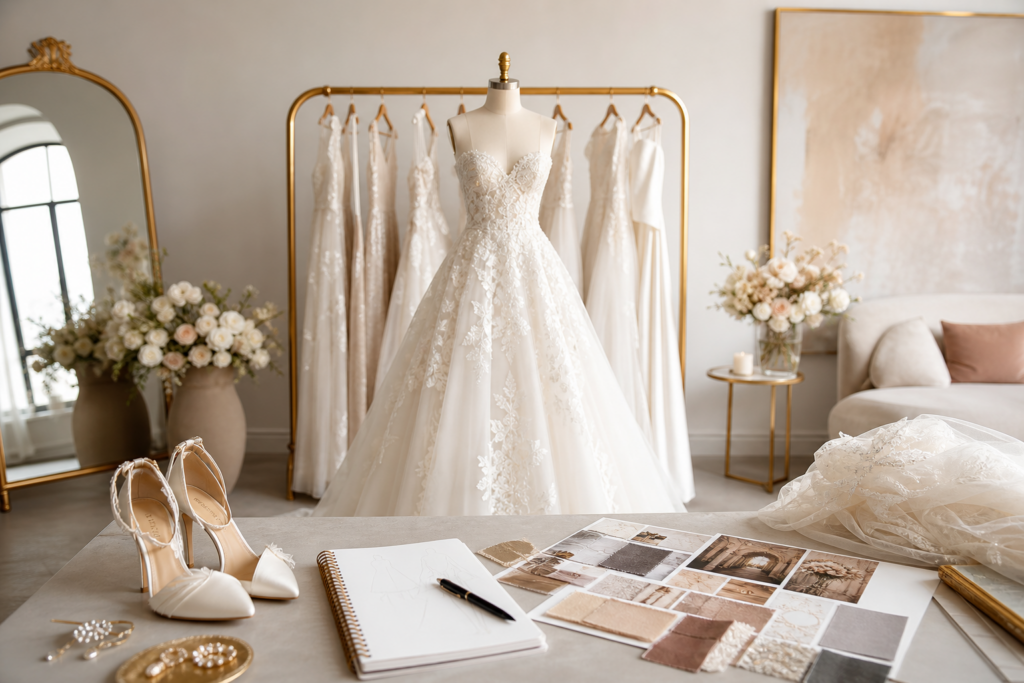
A lot of brides assume they are supposed to have the whole wedding figured out before they can shop seriously for a dress: the venue locked, the flowers chosen, the bridesmaid colors set, the shoes imagined, and the mood board somehow magically complete. ✨ In real life, that is rarely how planning works. Most brides are still making several decisions at once, and waiting for total clarity usually creates more pressure, not less.
No, you do need enough clarity to understand the setting, season, budget, and overall feeling you want on the wedding day, but you do not need every last detail decided first. The best dress decisions usually happen when the big-picture context is clear enough to guide the search, even if the finishing pieces are still coming together.
That is an important shift, because bridal shopping tends to go better when the goal is not “finish the whole vision first.” The better goal is “know the decisions that actually change what kind of dress will feel right.” Once brides understand that difference, the process gets much less intimidating and much more productive.
Start with the decisions that actually shape the search
The first things that matter are timing, budget, and the basic tone of the wedding day—not whether every decorative choice is already locked. 💍 If you know when you are getting married, what price range you want to stay in, and whether the day leans more formal, relaxed, romantic, modern, or outdoorsy, you already have enough to begin narrowing the field in a useful way. That is why starting with a realistic wedding dress shopping timeline matters so much more than waiting for some perfect planning moment that usually never arrives.
A dress search changes in meaningful ways when the wedding is six months away versus twelve, when the ceremony is in a cathedral versus a garden, or when the bride wants to feel structured and dramatic instead of soft and effortless. Those are the kinds of variables that actually influence silhouette, fabric, support, train length, movement, and alterations. Brides do not need every centerpiece or invitation detail in place to make smart decisions about those things.
Your venue matters, but it does not have to be fully locked first
A lot of brides get stuck here because they worry the venue should dictate everything. The venue absolutely matters, but it matters more as context than as a rigid rule. A bride usually does not need the contract signed and every reception detail finalized to know whether she is planning around a ballroom, a barn, a church, an outdoor estate, or a destination setting. That level of clarity is often enough to keep the dress search grounded.
What matters most is understanding how the dress needs to live inside the day. A long formal aisle, uneven outdoor ground, heavy summer heat, or a fast transition from ceremony to reception can all affect what feels beautiful and practical. Our post on matching your wedding dress to your venue without looking too themed or too plain is helpful here because it shows that venue fit is usually about balance, not literal matching. You are trying to make the dress feel right for the setting, not turn yourself into venue décor.
Let the rhythm of the day matter as much as the aesthetic
One of the easiest mistakes in bridal planning is focusing so hard on the visual concept that the actual wedding-day experience gets pushed too far down the list. 🤍 A dress can fit the mood board and still feel wrong if the bride cannot move comfortably, handle the weather, or picture herself getting through the full schedule with confidence. That is why we always think brides should weigh the rhythm of the day right alongside the look they want.
For example, a ceremony, cocktail hour, portraits, dinner, and dancing all ask something from a gown. If the dress only works for the still-photo version of the wedding, it may not be the best overall choice. That does not mean every bride has to choose the simplest or lightest dress in the room. It just means the final decision should account for movement, support, and practicality, not only aesthetics. Our alterations overview helps make that clearer, because so many comfort and function questions become easier once brides understand how fit, hemming, structure, and bustle planning affect the whole day.
Do not wait to know every accessory or décor detail
This is where a lot of overthinking happens. Brides convince themselves they cannot choose the dress until they know the veil, the jewelry, the shoes, the hairstyle, the table styling, and maybe even the exact photo vibe. ✅ In practice, that usually slows the process down without making the decision better. The dress should lead most of those styling choices, not the other way around.
Once the gown is chosen, the rest of the bridal look usually becomes much easier to refine. Neckline, embellishment level, silhouette, and fabric already give the accessories a direction. The same goes for hair and makeup balance. Even broader wedding visuals often get sharper once the bride can see the dress as the center point. When brides explore our wedding dresses collection, that is often the moment the rest of the look starts clicking, because the big decision is no longer abstract.
That is also why waiting for every décor or fashion detail can backfire. The more unfinished pieces you try to solve at once, the noisier the decision gets. It is usually smarter to choose the dress from solid big-picture context, then let that choice clean up the rest of the visual conversation.
What to bring into the appointment when the vision is still forming
If the wedding vision is only partly formed, the appointment can still be extremely productive. The key is bringing the right kind of information. A consultant does not need a perfect binder of answers. What helps most is a realistic date or season, a rough venue type, a budget range, an honest description of how you want to feel, and a sense of what has or has not been decided already.
That last piece matters more than brides expect. If you know you are still unsure about accessories, weather backup plans, or formality details, saying that out loud helps the appointment stay grounded in discovery instead of false certainty. Our Bridal 101 page is a helpful starting point because it frames the process around real decision-making, not around pretending every bride walks in with the entire wedding already solved.
The most successful appointments usually do not happen because the bride arrived with every answer. They happen because she arrived with the right questions, enough context to guide the search, and a willingness to let the dress decision sharpen the rest of the wedding vision instead of waiting for the rest of the wedding vision to become perfect first.
Ready to find your dress?
Book Appointment with our team and let us help you turn a partly formed wedding vision into a bridal look that feels clear, cohesive, and genuinely like you.
MB Bride & Special Occasion | MB Prom | Modern Tux
📍 123 S. Urania Ave., Greensburg, PA 15601
📞 Text Us: 724-836-6626 | Call
🌐 mbbride.com | mbprom.com | moderntux.com