
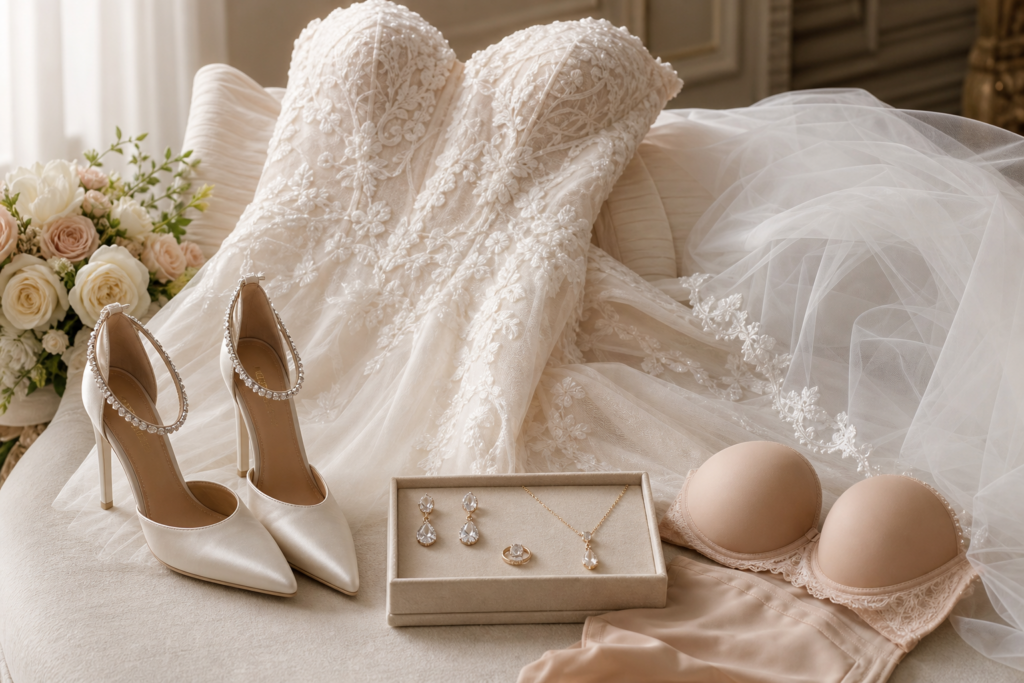
Buying your dress is a huge milestone—but it can also create a weird little panic spiral where every next step suddenly feels equally urgent. Do you book alterations first? Buy shoes? Figure out shapewear? Start trying veils? ✨ If you want the smartest starting point, it helps to look at real wedding dress styles and remember that the dress itself sets the order: once the gown is chosen, the next decisions should support fit, movement, and proportion before they chase finishing touches.
In most cases, start with your timeline and alterations plan, then lock in the support pieces that affect fit, then choose shoes early enough to guide hem and movement, and save most accessory decisions until the gown’s real proportions are clearer. Brides usually feel less overwhelmed when they build the look in that order, because each step makes the next one easier instead of more confusing.
A lot of post-purchase stress comes from treating every bridal decision like it belongs on the same day. It usually does not. The best process is less “buy everything now” and more “solve the foundational pieces first, then style from a position of clarity.”
Start with your timeline and alterations plan
The first thing we want brides to do after saying yes is zoom out and look at the calendar. Not because it is glamorous, but because timing controls almost everything else. Your wedding date, shipping window, alterations timing, and any travel or venue logistics will tell you how much room you actually have to make styling decisions thoughtfully instead of reactively. If you need a simple reset on that post-purchase phase, our guide to what happens after you say yes to the dress is a good place to start.
This is also why alterations should be treated as an early priority, even if your first fitting is not tomorrow. Brides sometimes hear “alterations later” and translate that into “ignore alterations for now,” but the smarter move is to understand the plan early. You do not need every tiny detail decided immediately. You do need to know what the runway looks like so you are not making last-minute choices on shoes, bust support, straps, sleeves, or bustle options without understanding what the dress will actually need.
Once the timeline feels real, a lot of the emotional noise drops away. You stop guessing and start sequencing. That alone makes the rest of the bridal look feel more manageable.
Lock in the support pieces that affect fit before the pretty extras
After the timeline, think about whatever changes how the gown sits on your body: undergarments, bra strategy, shapewear if you want it, cups, support, coverage, and comfort. Those decisions matter earlier than jewelry or veil styling because they affect posture, neckline confidence, and how the dress behaves when you actually move. If you are still trying to understand how fit and ordering logic work together, how do I know what size to order? is a helpful reminder that bridal sizing and real-life fit are not the same thing.
This is where we encourage brides to be honest instead of aspirational. If you know you hate tugging at strapless things, want more bust support, feel better with smoothing, or need the dress to work through a long ceremony-and-reception day, say that early. The point is not to force extra shapewear or complicated solutions. The point is to identify what helps you feel secure and comfortable before the dress gets hemmed, bustled, and fully finalized around a version of the fit that is not actually how you want to wear it.
Pretty extras are fun, but support pieces quietly do more to protect your confidence than most brides expect. When those basics are handled first, the gown usually starts making a lot more sense.
Choose your shoes before your hem and movement decisions get expensive
Shoes are one of the most commonly delayed decisions, and they are one of the easiest ways to create avoidable stress. You do not always need the exact final pair immediately, but you do need a realistic heel height and general shoe plan early enough to guide the hem, the way the skirt breaks, and how you will move through the day. This is exactly why our post on how alterations work for wedding attire matters so much: hemming, bustling, and movement planning all connect back to what is on your feet.
If a bride buys sky-high shoes on impulse and later switches to flats, block heels, or a shorter pair because the venue has grass, stairs, cobblestone, or a long dancing-heavy reception, that changes things. The same is true in reverse. A dress that looked perfect at one height can suddenly feel off if the shoe decision shifts too late.
The other thing shoes influence is energy. Brides often choose them visually first and practically second, when the better question is: will these still feel like a good idea after photos, cocktail hour, dinner, and a packed dance floor? When the shoe choice is realistic, the rest of the movement conversation gets easier too.
Finish with accessories once the gown’s proportions are clearer
Accessories usually work best as the finishing layer, not the starting layer. Once you know the fit direction, the support plan, and the shoe height, it becomes much easier to tell whether your look wants a dramatic veil, a lighter veil, statement earrings, softer jewelry, or almost nothing at all. A lot of brides style more successfully when they use one strong focal point instead of trying to make every accessory have a moment. If you want a helpful example of how proportion affects styling, our article on choosing the right wedding veil length without overwhelming your dress is a great reference.
This is also where the whole look should start feeling like you again instead of a to-do list. Rather than asking whether every individual piece is pretty on its own, ask whether it supports the dress’s neckline, fabric, scale, and mood. The cleanest bridal looks usually feel intentional because they are edited well, not because they have the most elements.
If you love options, gather ideas earlier—but save most final accessory decisions for when the gown’s real shape is clearer. ✅ That way your veil, jewelry, hair direction, and other finishing details are responding to the actual dress instead of an early guess about it.
The easiest rule to remember is this: fit and function first, finishing touches second. When brides work in that order, the whole process usually feels calmer, smarter, and much more cohesive.
Ready to find your dress?
Book Appointment with our team and let us help you build a bridal look that feels beautiful, comfortable, and well-timed from the first appointment through the final fitting.
MB Bride & Special Occasion | MB Prom | Modern Tux
123 S. Urania Ave., Greensburg, PA 15601
Text Us: 724-836-6626 | Call
mbbride.com | mbprom.com | moderntux.com