
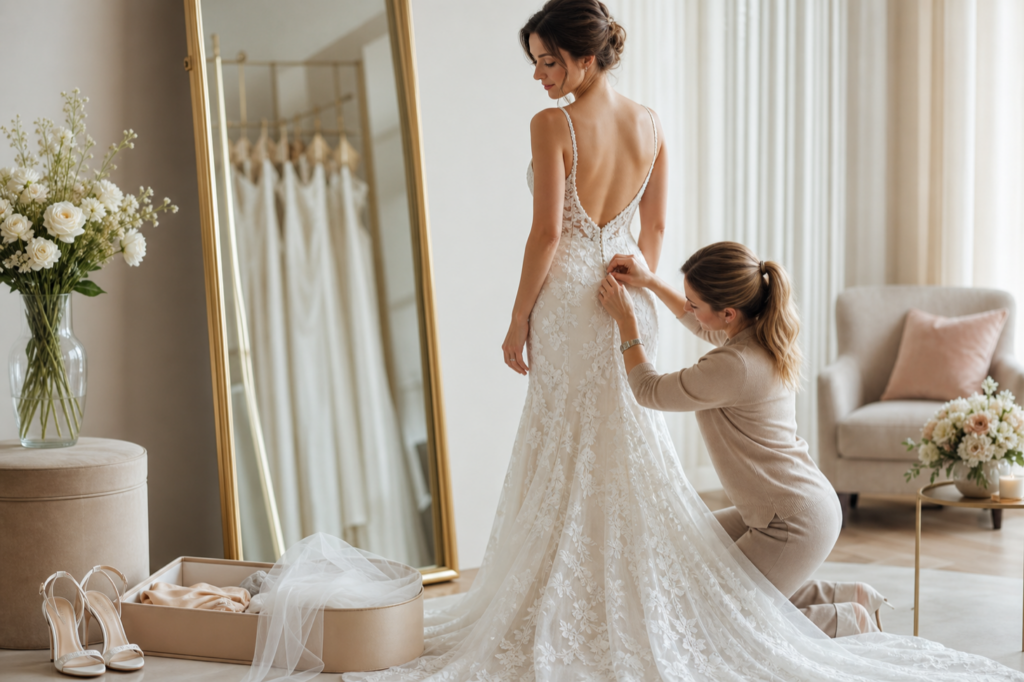
Buying the dress is a huge moment, but it is not the finish line. ✨ For a lot of brides, the stress shows up later, when the calendar starts shrinking and they realize alterations, shoes, undergarments, accessories, and bustle decisions all have to come together at the right pace. The good news is that the process usually feels much calmer when brides treat alterations as part of the full styling timeline instead of a last-minute tailoring errand.
Start earlier than feels strictly necessary, bring the right foundation pieces to the first serious fitting, separate must-do fit changes from optional custom ideas, and leave the final stretch for refinement instead of rescue mode. Brides usually feel the best when the dress is being adjusted in a way that supports the whole wedding-day plan, not just the hem.
That is also why this stage works best when it connects back to what happens after the purchase, not just the gown itself. A helpful starting mindset is to think about what happens after you say yes to the dress as a sequence of decisions, fittings, and finishing details that all affect how confident the final look feels.
Start the alterations plan before it feels urgent
The biggest reason alterations feel rushed is not that a bride did anything wrong. 🗓️ It is usually that the dress timeline gets mentally compressed until everything after the purchase starts feeling like one big final step. In reality, alterations work better when there is enough room for the gown to be assessed, adjusted, tried on again, and refined without every appointment carrying panic.
That matters even more if the dress needs more than a basic hem or strap adjustment. Custom sleeve ideas, neckline changes, reshaping through the bodice, train work, or extra support can all add complexity. Brides who already know they are managing travel, a tight venue calendar, or body changes along the way should build in extra breathing room and think through practical concerns like what if my size changes before the wedding before the schedule gets tight.
The goal is not to create drama around lead times. It is to protect enough space for smart decisions. When alterations begin with margin, the whole process feels more like refinement and less like racing the clock.
Have your shoes and key underlayers ready for the first real fitting
A bride does not need every finishing detail solved immediately, but the first serious fitting goes better when the core foundation pieces are already becoming clear. Heel height affects the hem. Shapewear or support pieces can change how the dress sits through the waist and hips. Bust support choices can affect neckline confidence, comfort, and what adjustments actually make sense.
This is one reason it helps to keep a broad wedding dresses collection in mind as part of the bigger process rather than thinking of the gown in isolation. Different silhouettes respond differently to shoe height, movement, structure, and underpinnings, so the alterations plan should support the actual shape and feel of the dress you chose, not a vague idea of what bridal finishing pieces are “supposed” to be.
If the exact wedding shoe is not finalized yet, bring the closest realistic option. If shapewear is still in question, bring the leading contender rather than guessing. The more real the foundation pieces are at the fitting, the less likely it is that later changes will undo earlier tailoring decisions.
Separate essential fit changes from optional styling upgrades
This is where brides can save themselves a lot of pressure. 👗 Some alterations are essential because the dress needs to fit, move, and stay secure. Others are optional because they are more about customization, styling, or changing the mood of the gown. Those optional ideas can be beautiful, but they should not crowd out the core work that makes the dress wearable and flattering first.
That is why it helps to revisit the logic behind what should you prioritize first after buying your wedding dress: alterations, shoes, undergarments, or accessories. The strongest timeline usually handles fit first, then layers in finishing choices in the order they actually affect the gown. A bride who knows the difference between “this must be fixed” and “this could be added if time and budget allow” tends to make better, calmer decisions.
In practical terms, that means getting honest early about what the dress truly needs. Hem, strap length, bust support, waist fit, bustle planning, and movement often matter more than chasing several custom add-ons at once. Once the essentials are solid, it becomes much easier to judge whether extra design touches will genuinely improve the dress or just complicate the timeline.
Leave room for the whole look to come together at the fitting stage
A wedding dress rarely makes full visual sense all by itself. 💍 Alterations are often the moment when the whole bridal look starts clicking because proportions, shoe height, jewelry scale, veil placement, and movement finally show up together in real life. Brides who treat fittings as only a tailoring checkpoint sometimes miss how useful that moment can be for styling clarity.
That is why we like using a resource like Bridal 101 as part of the bigger planning conversation. The dress, accessories, and final presentation should support one another. If the gown is already dramatic, the accessories may need to stay edited. If the dress is clean and minimal, the finishing pieces may be what give the whole look polish and dimension. Alterations sit right in the middle of that decision-making process because they affect how everything else reads on the body.
It also helps to think about the bustle, walking comfort, sitting comfort, and how the dress transitions from ceremony to reception. A look that photographs beautifully but feels awkward once the bride starts moving through the day is not really finished yet. The fitting stage is where those questions should become obvious enough to solve calmly.
Protect the final weeks for polish, not emergency decision-making
The last stretch before the wedding should ideally be about confirming, practicing, and feeling settled. It should not be the first time a bride is figuring out whether the hem works, whether the bustle feels manageable, or whether the underlayers are fighting the dress. When those discoveries happen too late, even a beautiful gown can start to feel stressful.
That is part of why brides often feel more confident when they work with a team that understands both styling and real-life bridal logistics, not just measurements on paper. Knowing what to expect when wedding dress shopping at MB Bride also helps many brides understand that the process is meant to support the whole experience, from the first appointment through the final details.
At MB Bride, we see the best outcomes when the alterations timeline is treated as part of the full wedding-day strategy. The dress should not only fit. It should feel ready for movement, photos, emotion, weather, hugs, dancing, and the pace of the day. When brides leave enough room for that refinement, the final look usually feels polished, personal, and much less rushed.
Ready to find your dress?
Book Appointment with our team and let us help you find a gown — and a planning process — that feels thoughtful from the first try-on to the final fitting.
MB Bride & Special Occasion | MB Prom | Modern Tux
📍 123 S. Urania Ave., Greensburg, PA 15601
📞 Text Us: 724-836-6626 | Call
🌐 mbbride.com | mbprom.com | moderntux.com